
Mahotea Boone Trail Reflects Westlake’s Early History






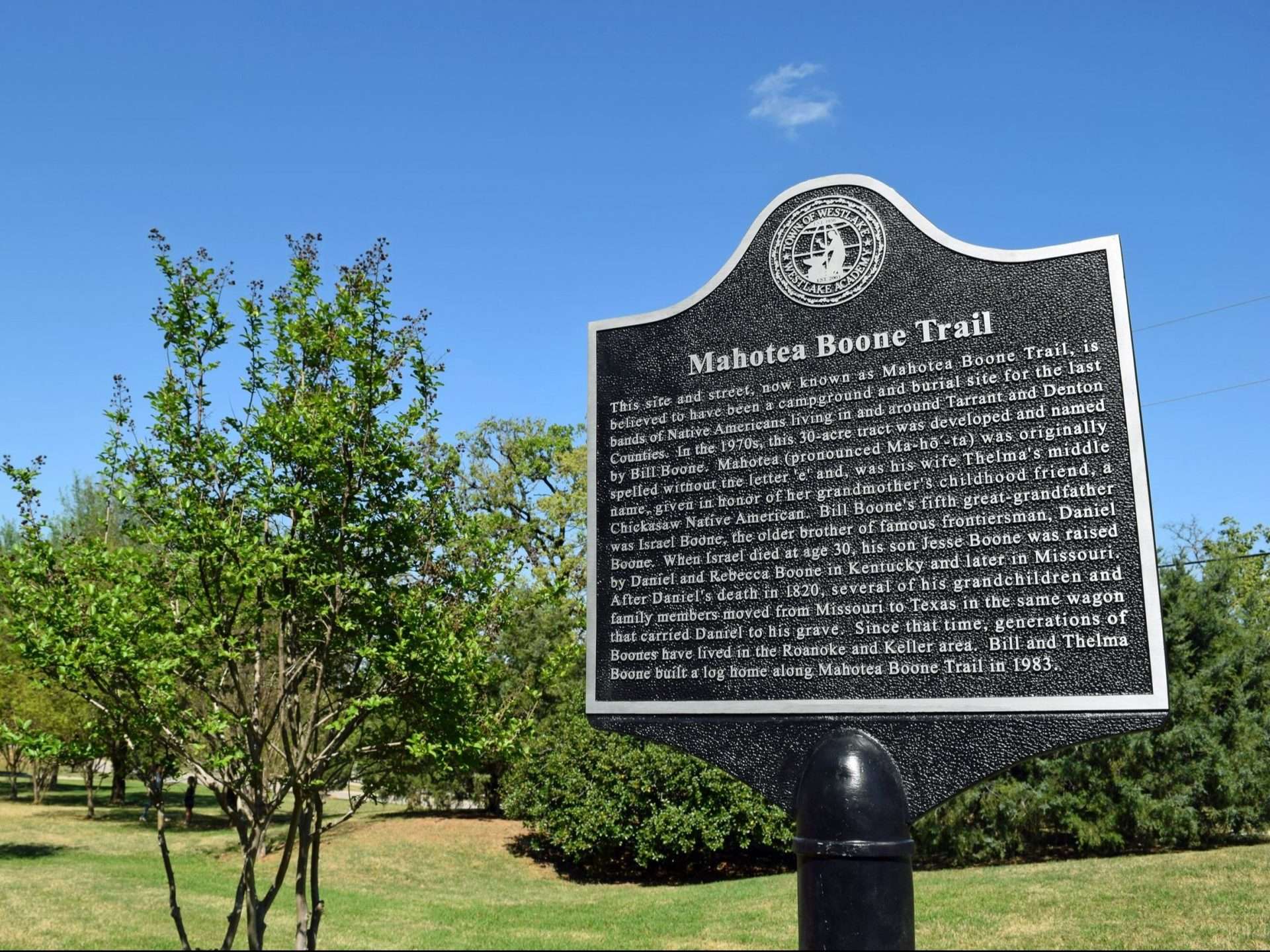
Photo courtesy of Town of Westlake
Photo courtesy of Town of Westlake
The Mahotea Boone Trail area carries a history that reaches back long before Westlake’s roads were paved and homes were built. The site was believed to have been a campground and burial site for early Native Americans.
A historical marker for the Star Stagecoach Route, located just east of the area, describes several encounters between travelers and Native Americans living in what are now Tarrant and Denton counties. That history makes the claim about the Mahotea Boone Trail site a possibility.
Surrounded by the oak trees and prairies of the Cross Timbers, the land was developed into a residential subdivision in the early 1970s by Bill Boone. Mahotea Boone includes fourteen lots, eleven of which currently have older homes. The subdivision is zoned for a minimum of two-acre lots and appears to be redeveloping with larger homes.
Boone selected the name Mahotea, pronounced “Ma-ho-ta,” in honor of his wife’s grandmother’s childhood friend from the Chickasaw Nation. Bill Boone was also related to Daniel Boone, the well-known American frontiersman and pioneer of the late 1700s.
Mahotea Boone Trail is one of Westlake’s oldest subdivisions. In 2017, it was designated a Texas Historical Marker. The Westlake Historical Society unveiled the marker during a dedication ceremony at the intersection near J.T. Ottinger Road.
The ceremony brought Westlake neighbors together to build a shared understanding of the area’s history. Today, the marker and the surrounding subdivision remain reminders of the people, landscapes and stories connected to Westlake’s past.