
Understanding Severe Thunderstorm Risk Categories






Stay Weather-Aware with These Important Safety Guidelines
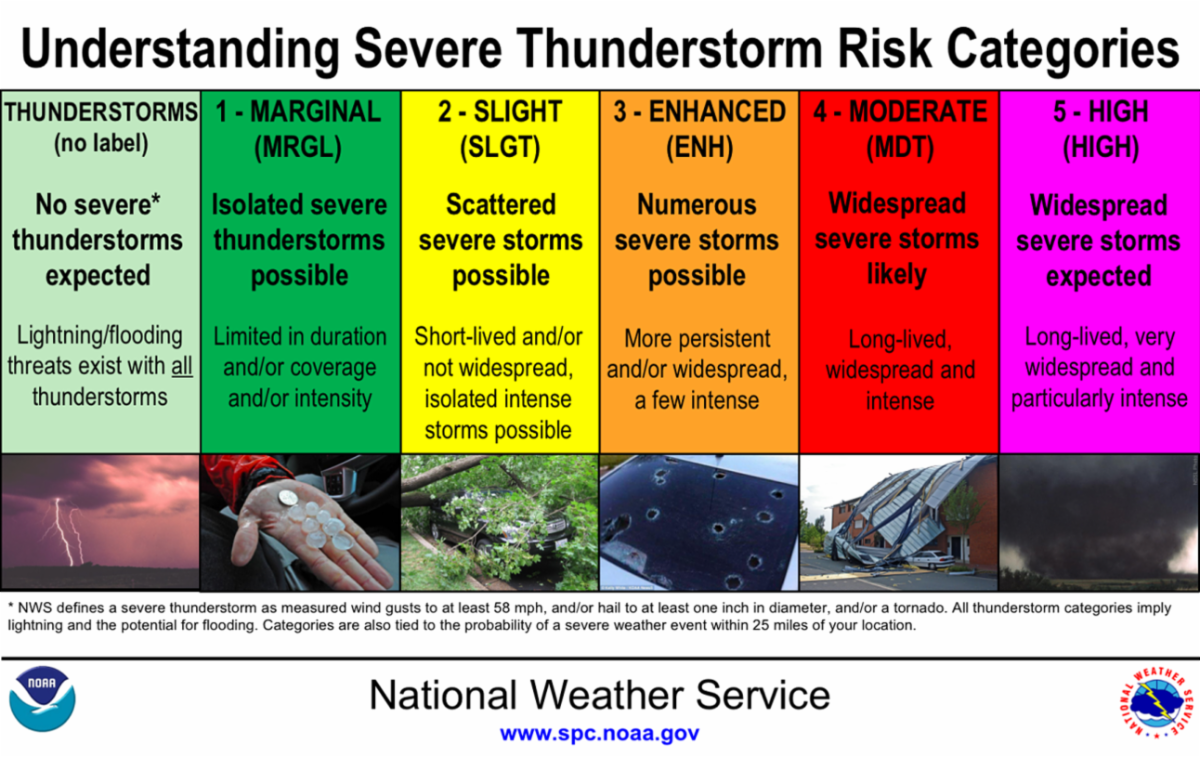
As storm season approaches, understanding the different levels of severe weather risk can help you stay informed and prepared. The National Weather Service (NWS) has established five distinct categories to classify the potential severity and impact of thunderstorms. Each level highlights the likelihood, coverage, and intensity of storms expected within a given area—typically within 25 miles of your location.
Here’s a breakdown of the Severe Thunderstorm Risk Categories:
🌦 Thunderstorms (No Label)
No severe thunderstorms expected.
While these storms are not classified as severe, lightning and flooding threats still exist. Always stay alert, especially when engaging in outdoor activities.
🟩 Category 1 – Marginal Risk (MRGL)
Isolated severe thunderstorms possible.
These storms are limited in duration, coverage, and/or intensity. While not widespread, isolated strong storms may develop, so caution is advised.
🟨 Category 2 – Slight Risk (SLGT)
Scattered severe storms possible.
Storms in this category are typically short-lived and not widespread, though isolated intense storms may occur. Be weather-aware and monitor alerts.
🟧 Category 3 – Enhanced Risk (ENH)
Numerous severe storms possible.
Expect more persistent and/or widespread storms, including a few that may be intense. Preparation and early planning are key at this level.
🟥 Category 4 – Moderate Risk (MDT)
Widespread severe storms likely.
Storms are typically long-lived, widespread, and intense. Significant impacts may occur, including damaging winds, large hail, or tornadoes. Take precautions seriously.
🟪 Category 5 – High Risk (HIGH)
Widespread severe storms expected.
This is the most serious level. Storms are expected to be long-lived, very widespread, and particularly intense. These events can cause catastrophic damage and require immediate and decisive action.
⚠️ Know the Definition of a “Severe Thunderstorm”:
According to the NWS, a thunderstorm is considered severe when it produces:
- Wind gusts of at least 58 mph, and/or
- Hail at least 1 inch in diameter, and/or
- A tornado
All thunderstorms—regardless of category—carry the potential for lightning and flooding.
To stay informed:
- Visit www.spc.noaa.gov
- Sign up for weather alerts
- Monitor local forecasts
- Have an emergency plan in place